An AI Search Topic Gap Is Not a Content Brief
Bing’s new Topics Portfolio can surface AI-search opportunities. Before commissioning content, test buyer fit, evidence and whether a new page is needed.
An empty spot on a dashboard is not an assignment.
It is tempting to treat it as one. A report surfaces a topic your site barely appears in. Other sites have citations. Your team has a publishing target. The obvious next step seems to be another article.
But there is a question to answer before anyone opens a document: If we became useful on this topic, would we be helping someone who could reasonably become our customer?
That is the difference between finding an AI-search opportunity and choosing a worthwhile content brief.
What changed in Bing’s AI-search reporting
On October 13, 2026, Microsoft announced Topics Portfolio, a beta feature in Bing Webmaster Tools’ AI Performance report. It groups grounding queries into themes and surfaces opportunity queries where other sites appear but yours does not. Availability depends on sufficient data for the site.
The distinction worth keeping: its Topic Size measure approximates citations across sites for a topic. It is not a Google Keyword Planner monthly search-volume estimate, and it is not a count of people ready to buy from you.
Microsoft also warns that classifications can be imperfect, small topics may be absent, and opportunities can include another company’s branded queries. Treat the report as a source of leads for investigation—not a ready-made editorial calendar.
Start with the buyer, not the gap
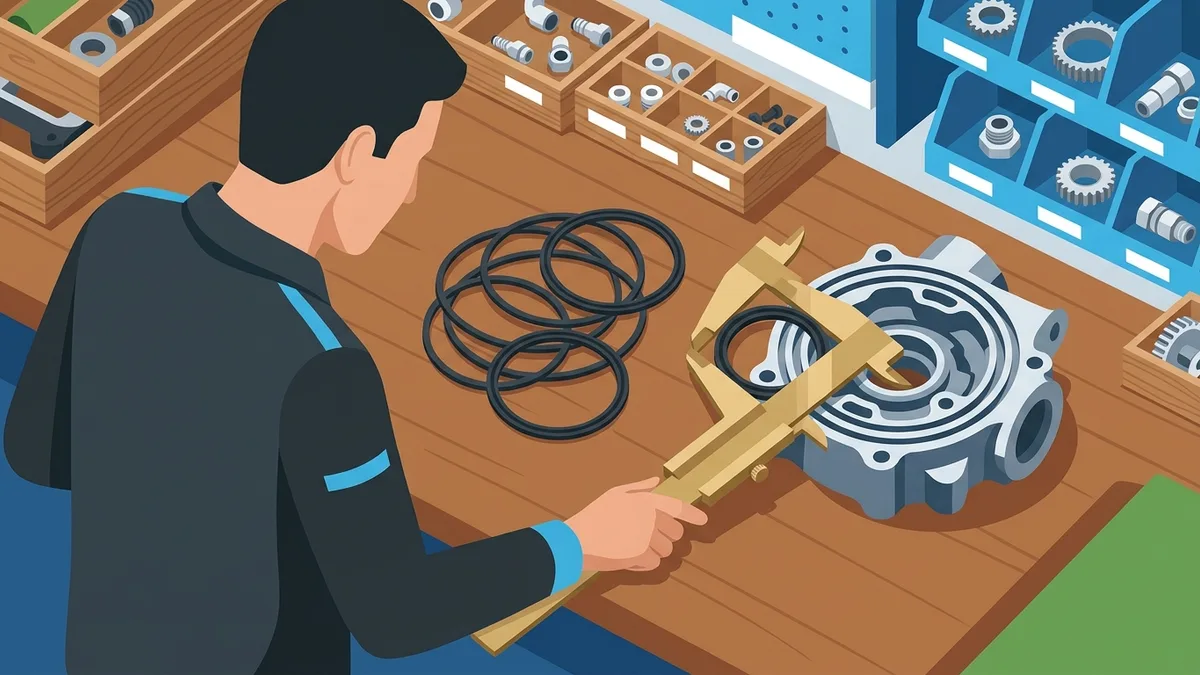
Imagine a specialist parts shop. This is a hypothetical example, not a customer result.
A broad home-improvement topic may look attractive beside a narrow question about whether a replacement seal fits a particular model. The broad topic offers many possible things to write. The narrow question gives the shop a specific decision it can help someone make.
The shop should not choose the narrow question because long-tail phrases are magically better. It should choose it if staff can verify the fit, explain the exceptions and help the right buyer take the next step.
Now imagine the gap is about replacing an entire heating system, while the shop only sells parts. Writing a sweeping buying guide might attract attention, but attention alone does not repair that mismatch.
Sometimes the correct response to a topic gap is to leave it open.
Put four questions between the report and the writer
1. Which real decision are we helping someone make? Translate the reporting label into a situation you recognize from sales or support. Do not assume a grounding phrase is the exact wording a customer typed. Write the buyer’s decision in ordinary language: “Will this fit my model?” is a briefable problem. “Improve topical authority” is not yet one.
2. What can we contribute that is not already in the answer? Look for a useful original contribution: a verified compatibility list, an explanation of a delivery constraint, a worked example with stated assumptions, or a specialist’s account of the trade-offs. If the plan is to summarize the same public pages everyone else can summarize, the gap has not earned a new article.
3. Where should the answer live? A missing product fact may belong on the product page. A service exclusion may belong beside the service description. A comparison involving several genuine choices may justify a separate article. Choose the page that serves the decision; do not make “new blog post” the default repair.
4. How will we tell whether the work helped? Pick the evidence before the launch. A clearer answer might reduce repeated support questions. A relevant page might produce qualified visits or a next-step action. Citation observations can be part of the review, but they are not a substitute for those outcomes.
Write a brief someone can disagree with
Here is a hypothetical brief for the parts shop:
- Buyer: an owner trying to replace a worn seal without buying the wrong part.
- Decision: whether this product fits the model they already own.
- Evidence: compatibility information checked by the person responsible for the catalog.
- Page change: add supported model identifiers, known exclusions and an honest route for unresolved cases to the existing product page.
- Review: record the change date; compare relevant inquiries and page actions over a stated period, noting other changes and low sample sizes.
That brief does not promise a citation. It makes a testable claim about what a buyer needs. A colleague can challenge the audience, the evidence or the page choice before the team pays to produce the wrong thing.
The same discipline applies to an agency’s own content. A report can suggest the conversation. The agency still has to decide what it knows, whom it serves and what useful work it can show.
Keep the report in its lane
Microsoft’s earlier explanation of Citation Share explicitly separates that observation from rankings, traffic share and content-quality scores. Its original AI Performance announcement describes grounding-query data as a sample of citation activity across supported experiences. Neither gives you a universal view of ChatGPT, Claude, Gemini or every other assistant.
For a separate perspective, Google’s people-first content guidance asks whether content serves an intended audience and adds original value. That does not validate any Bing metric. It is a useful editorial test in its own right.
Our position is simple: use AI-search reporting to discover questions worth investigating. Use buyer knowledge and evidence to decide which ones deserve your time.
Before your next content meeting, bring one topic opportunity and a four-line brief: buyer, decision, evidence and page. If you cannot fill those lines honestly, keep researching instead of commissioning another article.
Ready to Get Found by AI Search Engines?
Schema injection plus up to 10 autopilot SEO articles a month. One script tag. Set it once and let it run.